In 2023 Jewish and Christian peoples the world over are celebrating the 75th anniversary of the establishment of the State of Israel.
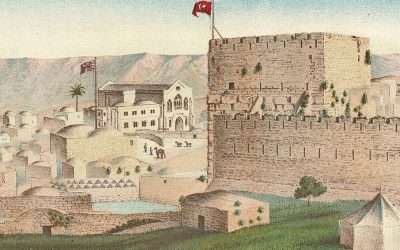
From Exile to Restoration (Part 1)
read more

In 2023 Jewish and Christian peoples the world over are celebrating the 75th anniversary of the establishment of the State of Israel.
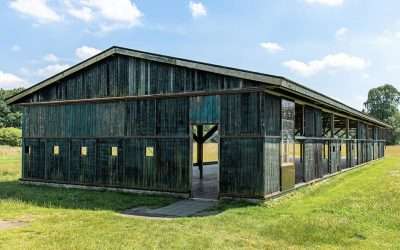
On 27 January 1945 Soviet troops liberated Auschwitz-Birkenau death camp, where an estimated 1.1 million Jewish people had been murdered.
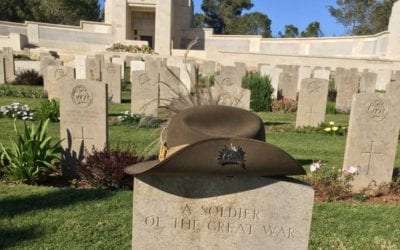
At almost all Anzac Day services we hear those profound words: ‘Greater love has no one than this that he lay down his life for his friends.’ (John 15:13) Those profound words were spoken by Jesus—just a few hours before he experienced an excruciating death—a death He didn’t have to die, but a death He undertook knowing full well that his sacrifice would benefit many others. Jesus set the supreme example of self-sacrifice. In our Anzac history we have numerous examples of how our soldiers have sacrificed their lives for the sakes of others. Most of the accounts we hear of relate to actions on the battlefield, when soldiers have saved the lives of other soldiers. But I would like to present to you another perspective involving self-sacrifice for the benefit of others. This perspective revolves around the actions of our soldiers in saving the lives of innocent civilians, for whom death would most likely have resulted had our soldiers not intervened. I can only relate to you several such examples—and there are so many others even that I am not aware of. At the beginning of World War One the Ottoman Turkish regime began to implement a policy of […]
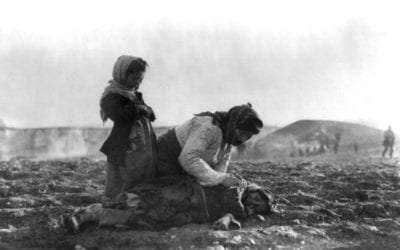
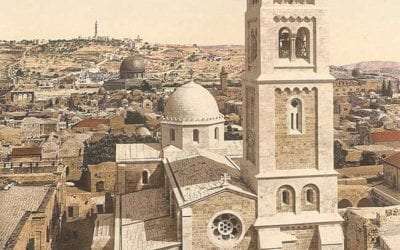
Passover and Easter I was recently in Jerusalem co-leading a tour with my daughter, and had never seen the Old City so full. No wonder, as it was both the season of Passover and Easter. Although this had occurred before, this year was different as Easter for both the Western and the Eastern Christians fell at the same time. It seemed like the world was in Jerusalem in order to remember the events associated with Passover and Easter, both of which are associated with redemption from slavery and death to freedom and life. Remembering the Armenian and Jewish Genocides and the Anzacs No sooner had this season ended when another season of remembrances began. On 24 April the Armenian and some other Christian communities remember the official beginning of what is generally regarded as the Armenian Genocide on 24 April 1915. It is a sombre day indeed for these communities. Also on 24 April 2017 remembrance of the world’s worst genocide, the Holocaust, took place. Yom HaShoah, Holocaust Day, is indeed a solemn day for the Jewish people. One objective in remembering the Holocaust is that such evils can never again be perpetrated. Such a sentiment is borne out by […]
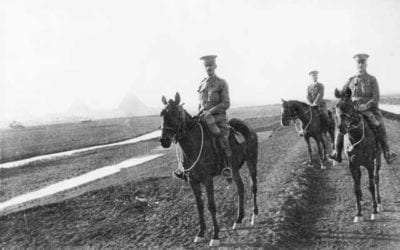
World War One & the German-Turkish alliance When War broke out in August 1914 Germany and Ottoman Turkey had already entered into a secret agreement. Britain was now reluctantly forced into conflict against the Turks. The area of greatest strategic and military importance was the Suez Canal. Everything needed to be done to preserve the link to the eastern empire. Indeed already at that stage strategists were looking to the post-War period, and what would be best for Britain and this link. One Jewish parliamentarian, Herbert Samuel proposed in 1914-5 that Britain should take control over ‘Palestine’ and permit the establishment there of a Jewish national entity. From March 1915 a two-fold movement began which climaxed on 31 October 1917. The first was military, and began on the shores of Gallipoli. This campaign ended in failure, and resulted in Turkey planning for the capture of the Suez Canal. Britain’s goal was to protect the Canal, and the most effective method was by creating a buffer zone up to the Sinai-Palestine border. The second movement was political, and resulted from a Russian demand in March 1915 that following victory at Gallipoli and once Constantinople fell, then Russia would gain the region […]
Jewish people recognise the 9th day of Av as of great significance, the day on which both of the Jewish temples were destroyed, as well as other events in their history. But there is also another day on which a number of key historical events occurred which impacted the Jewish people – in the modern period. That day is 31 October. Most Australians will immediately think of the charge of the Light Horse at Beersheba in 1917 on that day. This was my initial focus when taking groups down to Beersheba on the ‘In Step with Allenby and the Light Horse’ tours. Then in the early 1990’s while researching in the National Archives in London I read through the Minutes of the British War Cabinet for 31 October 1917 and discovered that the decision for establishing a Jewish national home in Palestine (known as the Balfour Declaration) was also made on that very same day. That indeed was a revelation. But wait – there is more. A German connection – 31 October 1517 On 31 October 1517 Martin Luther challenged the Roman Catholic Church, and effectively triggered off the Protestant Reformation. Despite Luther’s negative attitude towards the Jewish people, as […]