
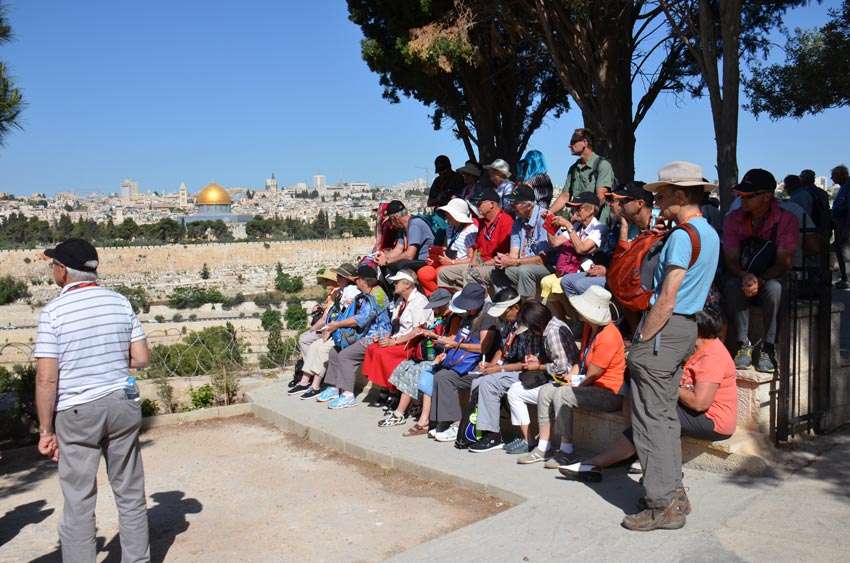
In Part 01 of our series about Jerusalem and Christians visits, we learned that the ‘river of pilgrimage’ has been flowing from the very beginning of the church age.
Christians constitute the highest amount of sacred visitors to a holy city which is also sacred to Judaism and Islam, too. This growing phenomena in Christian visits is even more remarkable considering that neither Christ nor the apostles command it, and there is more of a spiritual, rather than geographic, emphasis in Christian worship.
We also learned why Christians visit Jerusalem. They can be summarised in two key words:
Devotion: From the very beginning, Christians have been motivated to visit Jerusalem so that they can ‘walk where Jesus walked.’ Following in the footsteps of the Master is a strong sign of devotion.
Education: Pious believers visit Jerusalem because they want to learn more about the Bible. Considering that Jerusalem is mentioned over 811 times in the KJV, it is indisputably the premier city of Scripture.
What is remarkable is that these twin pillars of devotion and education can be applied across the board, to pilgrims from every denomination and every century of the church age.
The Tourism Factor
To the ancient practice of Christian pilgrimage we need to add the phenomena of modern mass tourism. It is a multi-billion dollar growth industry and has been particularly potent since the end of the Second World War. How does modern tourism affect time-honoured Christian pilgrimage?
We begin by defining tourist:
An individual who temporarily leaves their home and travels in order to pursue pleasure and holiday-making.
There is both domestic and international tourism. In many countries incoming non-residents and non-immigrants receive a ‘tourist visa,’ whether their purpose is business, religious, or recreational. Specifically, an international tourist is a person who enters a country for the purpose of touring, pleasure, leisure, and/or sightseeing.
Since the Second World War, there is has been a measurable rise in the disposable income and discretionary time. No longer is tourism reserved for the rich and famous; travel costs have become more affordable. This means that working class people can now do international tourism. Many nations, especially those with limited natural resources, welcome the trend towards mass tourism as a means of earning hard currency, providing jobs, and building better international relations.
…In the year 2016 alone, there was a grand total of 3,069,800 tourists.
The advent of the modern tourist industry has had an incalculable effect on Christian visits to the Holy City, especially since 1967. After the June (Six Day) War, Israel captured territory which contains some of the most important holy (Biblical) sites in the world. In recognition of this fact, Israel’s Ministry of Tourism sought for ways to attract as many Christian visitors as possible. Naturally, Jewish tourism was also encouraged but with only 14 million Jews worldwide and 6.5 million in Israel alone, the potential of mass Jewish tourism is limited. The Christian world potentially offers tens of millions of potential visitors, who can visit the Biblical sites, invest money, and return home as good-will ambassadors.
Israel’s Ministry of Tourism
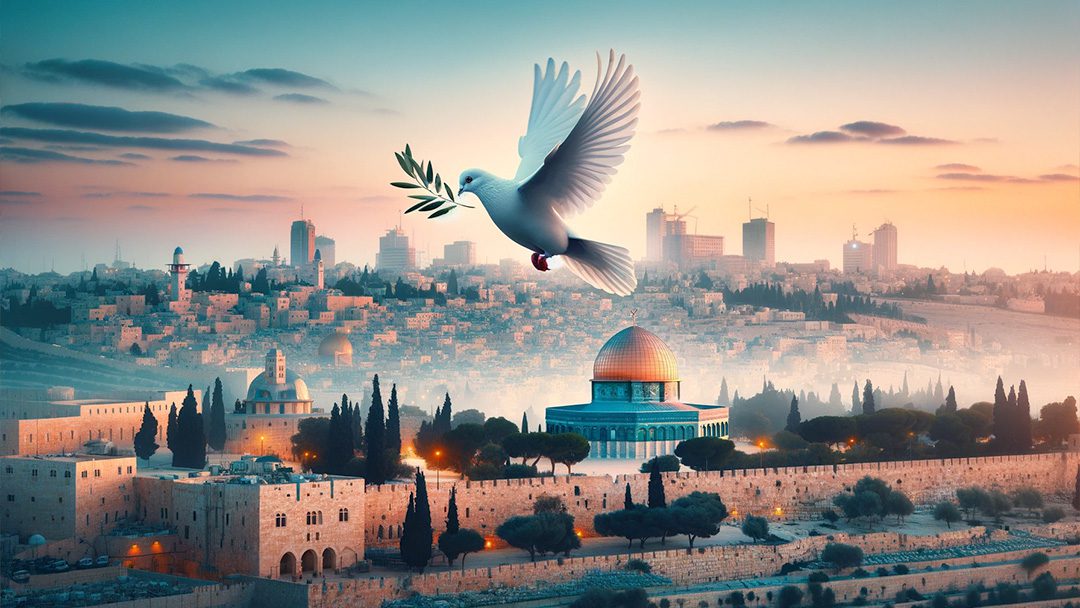
The Israeli Ministry of Tourism began the (Christian) Pilgrimage Promotion Department. Starting with virtually no knowledge of Christianity, the department learned the vocabulary used by different Christian denominations, the numerous holy and feast days, and the significance of the major and minor holy sites. They produced travel posters (the Church of the Annunciation in Nazareth was a favoured pre-1967 theme; since then the skyline of Jerusalem is the most common), and pilgrims’ maps. Christians worldwide have been encouraged to visit their favourite holy places of Bethlehem, Nazareth, the Sea of Galilee, and Jerusalem, all under one roof.
Full-page ads were placed in Christian periodicals stating ‘Come walk where Jesus Walked… Israel Government Tourist Office.’ Israel Information Nights, which featured film and talks, were hosted in major centres. Free or subsidised tours were offered to pastors and Christian leaders with the view that they will bring a tour of their own in the future. Furthermore, the Ministry of Tourism embarked on an ambitious program of training Israelis as licensed guides, building hotels, importing air-conditioned top of the line tour buses, and including archaeological sites, museums, and the Yad Va Shem Holocaust Memorial onto the tour itinerary. While the Ministry of Tourism seeks to attract all kinds of tourists, including secular holiday-makers to Tel Aviv and Eilat, it has been especially effective in targeting Christians to come to Jerusalem.
The efforts of the pilgrimage promotion department and the ministry of tourism have paid off. According to the Central Bureau of Statistics, tourist numbers to Israel have increased from a 1972 figure of 727,533 visitors to a 1990 total of 1,341,700.
Here are some interesting statistics:
Tourism to Israel (of which 2/3rds are Christians and 90% plus of these visit Jerusalem) was a follows:
- 1970-1979: 7.7 million total
- 1980-1989: 12.6 million
- 1990-1999: 20.3 million
- 2000-2009: 19.3 million (the second intifada of 2000-2004 is the reason for the dip)
In the year 2016 alone, there was a grand total of 3,069,800 tourists.1
Palestinian Arabs are also interested in being part of the tourist industry. Since 1986 Bethlehem University offers a tour-guide course and school of hotel management. Since the Oslo accords of 1993, the Palestinians are custodians of some important Biblical sites, like the Church of the Nativity in Bethlehem, the Tomb of the Patriarchs in Hebron, the city of Samaria (also known as Sebastiyah), and Jacob’s Well (John 4) near Nablus. Even in Israeli hotels in Jerusalem, Tiberias, and elsewhere, many of the employees are Arabs.
There is evidence that Jerusalem is the universal destination of all Christian Holy Land tour itineraries and a regular stop on the vast majority of private Christian visits. One survey called estimated that over 90% of Christians visited Jerusalem. Even Northern Europeans who have a winter ‘sun holiday’ in Eilat on the Red Sea, using a chartered flight, make sure they stop by Jerusalem to visit holy sites before returning home.
The promotion and marketing of tourism to the holy land definitely explains the increased number of visitors. Yet these promoters do not have to do a ‘hard sell:’ Jerusalem is a magnet for Christian visits in its own right.
To be continued.
1 Statistics courtesy of the Israel Central Bureau of Statistics.







0 Comments